Mansa Musa: The King Whose Wealth Makes Today’s Billionaires Look Small
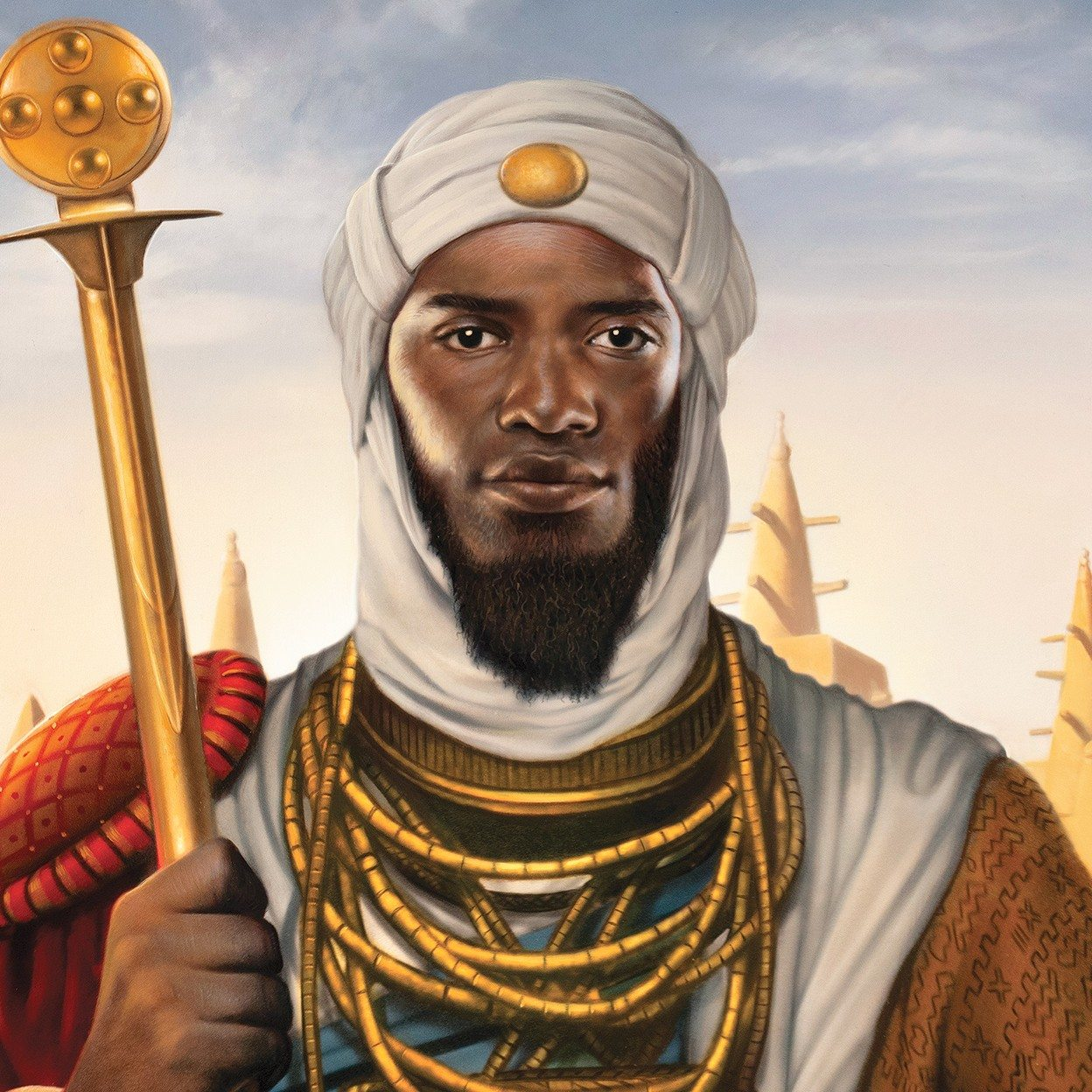
In the early 14th century, long before the modern world learned to measure wealth in numbers, there lived a ruler whose riches could not be counted. There were no balance sheets, no stock exchanges, and no billionaire rankings. Yet one man possessed more wealth than any individual before or after him.
His name was Mansa Musa.
This is not legend or exaggeration. His story appears in historical records, travelers’ accounts, and medieval maps. What remains difficult is not whether he was rich, but how rich he truly was.
A Forgotten Global Power
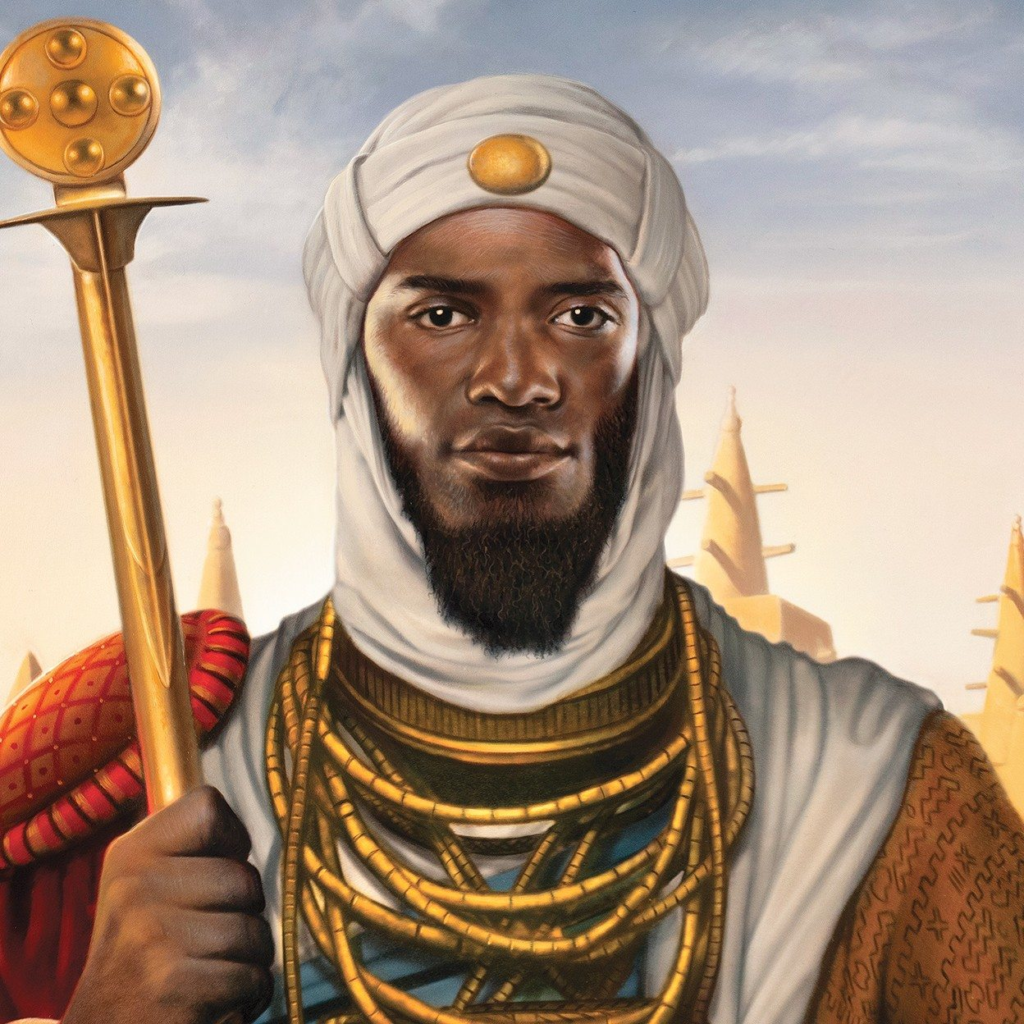
The Mali Empire was one of the largest and wealthiest states of its time. Spanning large parts of present-day West Africa, it sat at the heart of global trade routes connecting Africa with the Middle East and Europe.
Gold was the backbone of the medieval economy, and Mali controlled the world’s most productive gold mines, particularly in Bambuk and Bure. At its peak, historians believe that more than half of the world’s gold supply passed through Mali’s territory.
Mansa Musa ascended the throne in 1312. He inherited wealth, but through strong governance, he transformed it into global influence.
The Ruler Behind the Wealth
Historical accounts describe Mansa Musa as disciplined, deeply religious, and deliberate in his rule. He did not rely on constant warfare. Instead, he focused on administration.
Trade routes were protected by the state. Taxation was structured and predictable. Contracts were enforced. These systems created trust, and trust attracted merchants from across the Islamic world.
Gold was regulated carefully. Gold nuggets remained under royal control, while only gold dust circulated in markets. This policy prevented inflation within Mali and ensured long-term economic stability.
His wealth was not chaotic. It was managed.
The Journey That Shook Economies
In 1324, Mansa Musa began his pilgrimage to Mecca. The scale of the journey stunned the world.
He traveled with tens of thousands of people, accompanied by soldiers, officials, scholars, and servants. Camels carried vast quantities of gold. As he passed through Cairo and other cities, he distributed gold generously.
The impact was immediate. Gold flooded the markets of Egypt. Its value collapsed. Prices rose sharply, and inflation persisted for years. Economists today regard this event as one of the earliest recorded examples of monetary disruption caused by a single individual.
For the first time, the wider world recognized the scale of African wealth.
When Wealth Exceeded Control
The economic damage caused by the gold distribution forced an unprecedented response. Historical records suggest that Mansa Musa borrowed gold back from Egyptian merchants on his return journey to stabilize the market.
This episode reveals something crucial. Mansa Musa understood responsibility. He recognized that even immense wealth had limits and consequences.
His fortune was not symbolic. It was powerful enough to influence international economies.
Daily Life Inside the Empire
Within Mali, wealth translated into stability rather than excess. Farmers paid taxes in crops and livestock. Traders paid duties at checkpoints. In return, roads were safe, markets were regulated, and justice was predictable.
Cities such as Timbuktu, Gao, and Djenne flourished as centers of trade, culture, and learning. Travelers later described Mali as one of the safest regions they had ever visited.
Order, not extravagance, defined daily life.
Timbuktu and the Investment in Knowledge
Mansa Musa believed wealth without education was fragile. He invested heavily in intellectual life.
Mosques served as schools. Libraries housed thousands of handwritten manuscripts on law, science, astronomy, and philosophy. Scholars from North Africa and the Middle East traveled to Timbuktu to teach and study.
At a time when literacy was rare across much of the world, Timbuktu emerged as a global center of knowledge. Education became a second form of currency within the empire.
How the World Tried to Understand Him
European mapmakers struggled to explain this powerful African ruler. In 1375, the Catalan Atlas depicted Mansa Musa seated on a throne, holding a gold nugget. The image symbolized awe and uncertainty.
It was an attempt to explain a wealth beyond familiar limits.
Estimating Mansa Musa’s Wealth in Today’s Perspective
Estimating Mansa Musa’s wealth using modern standards is extremely difficult. His fortune was not stored in banks or companies. It was embedded in land, labor, gold mines, trade routes, and political control.
Historians and economists use several approaches to approximate his wealth:
One method compares Mali’s share of global gold production to today’s gold reserves. Another compares the economic output of Mali to modern global GDP ratios. A third evaluates his ability to influence regional economies.
Using these methods, many scholars suggest that Mansa Musa’s wealth would exceed 400 to 600 billion US dollars in today’s terms. Some argue it could be even higher.
However, most historians agree on one point: any numerical estimate understates his true wealth.
Unlike modern billionaires whose fortunes fluctuate with markets, Mansa Musa controlled the source of wealth itself. His power extended beyond money into governance, trade, and law.
No individual in the modern era has held that level of direct economic control.
Decline of an Empire, Survival of a Legacy
After Mansa Musa’s death around 1337, the Mali Empire gradually weakened due to internal conflict and shifting trade routes. Wealth declined. Political power faded.
But his name endured.
Centuries later, historians, economists, and scholars continue to study his life, not because of myth, but because the evidence remains compelling.
A Legacy Beyond Numbers
Mansa Musa’s story is not simply about extreme wealth. It is about how wealth can shape history when combined with order, responsibility, and vision.
He used gold to build stability, education, and trust. Long after the gold was spent, these investments continued to speak.
That is why Mansa Musa is remembered not just as the richest man in history, but as one of the most influential rulers the world has ever known.
Below is a clean, verified historical references section that you can add at the end of your documentary-style article.
These are credible, widely accepted academic and historical sources used by historians, universities, and documentaries.
The tone is factual and professional—perfect for building trust and authority on your website.
Construction in Mali
Musa embarked on a large building program, raising mosques and madrasas in Timbuktu and Gao.
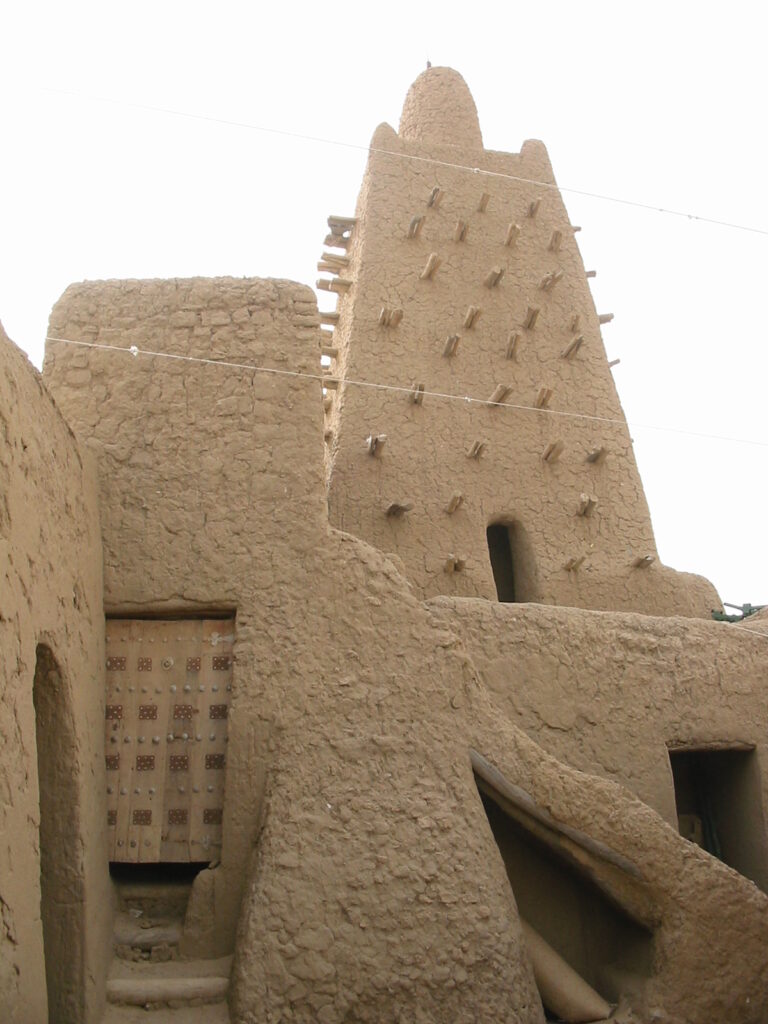
The Djinguereber Mosque, commissioned by Mansa Musa in 1327
Historical Sources and References
The life and wealth of Mansa Musa are not based on folklore or modern exaggeration. Much of what is known comes from respected medieval historians, travelers, and later academic research. The following sources are considered reliable by historians studying West African and Islamic history.
Primary Historical Accounts
Al-Umari (14th Century)
A Syrian historian and geographer whose writings provide some of the most detailed contemporary accounts of Mansa Musa. Al-Umari documented the Mali Empire’s wealth, governance, and the economic impact of Mansa Musa’s pilgrimage to Mecca, based on interviews with people who witnessed the events.
Ibn Battuta (1304–1369)
The famous Moroccan traveler visited Mali several years after Mansa Musa’s reign. His travel records describe Mali as a stable, wealthy, and well-governed empire with strong legal systems and public safety. His observations confirm Mali’s prosperity and administrative strength.
Cartographic and Visual Evidence
The Catalan Atlas (1375)
Created by Abraham Cresques, this medieval world map famously depicts Mansa Musa seated on a throne holding a gold nugget. The map reflects Europe’s awareness of Mali as a major source of gold and confirms Mansa Musa’s global reputation even decades after his death.
Academic and Modern Historical Research
Nehemia Levtzion – “Ancient Ghana and Mali”
A foundational academic work on West African empires. Levtzion provides detailed analysis of Mali’s political structure, trade systems, and economic power during Mansa Musa’s reign.
John Iliffe – “Africans: The History of a Continent”
This book places Mansa Musa within the broader context of African history and challenges outdated narratives that ignore Africa’s economic and intellectual achievements.
François-Xavier Fauvelle – “The Golden Rhinoceros”
A modern historical work that uses archaeology and manuscripts to reconstruct medieval African civilizations, including Mali and its global trade connections.
Economic and Wealth Analysis References
British Museum – West African Gold Trade Studies
Research published by the British Museum explains how West African gold shaped medieval global economies and confirms Mali’s dominant role in gold production.
Encyclopaedia Britannica – Mansa Musa
Provides a concise, academically reviewed summary of Mansa Musa’s reign, wealth, pilgrimage, and cultural contributions.
- The Richest Man in Babylon Review: Ancient Money Rules That Still Work Today
- Sony PlayStation vs Xbox: Full Comparison (2026) – Which One Should You Buy?
- Retirement Calculator Theory in America: Why the $1 Million Dream Is Breaking for Blue-Collar Workers
- Mansa Musa: The King Whose Wealth Makes Today’s Billionaires Look Small