Best Gadgets to Carry Before a Mountain Hike
Mountain hiking is one of the best ways to escape the busy routine and spend some time close to nature. Fresh air, beautiful views and challenging trails can make a hike an unforgettable experience. But mountains can also be unpredictable. Weather can change quickly, mobile signals may disappear, and even an easy-looking trail can become difficult
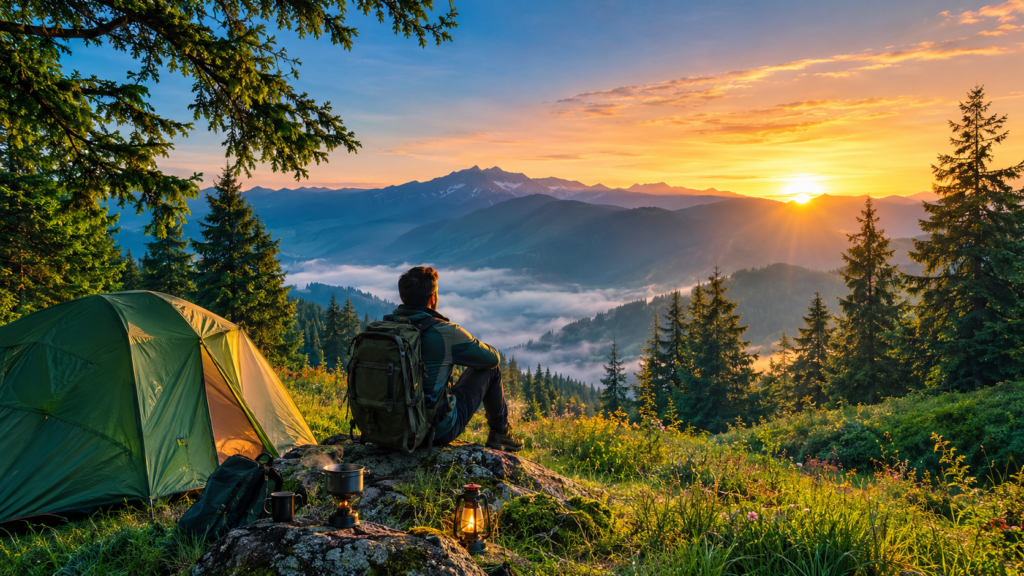
Gadgets You Should Carry Before Any Mountain Hike
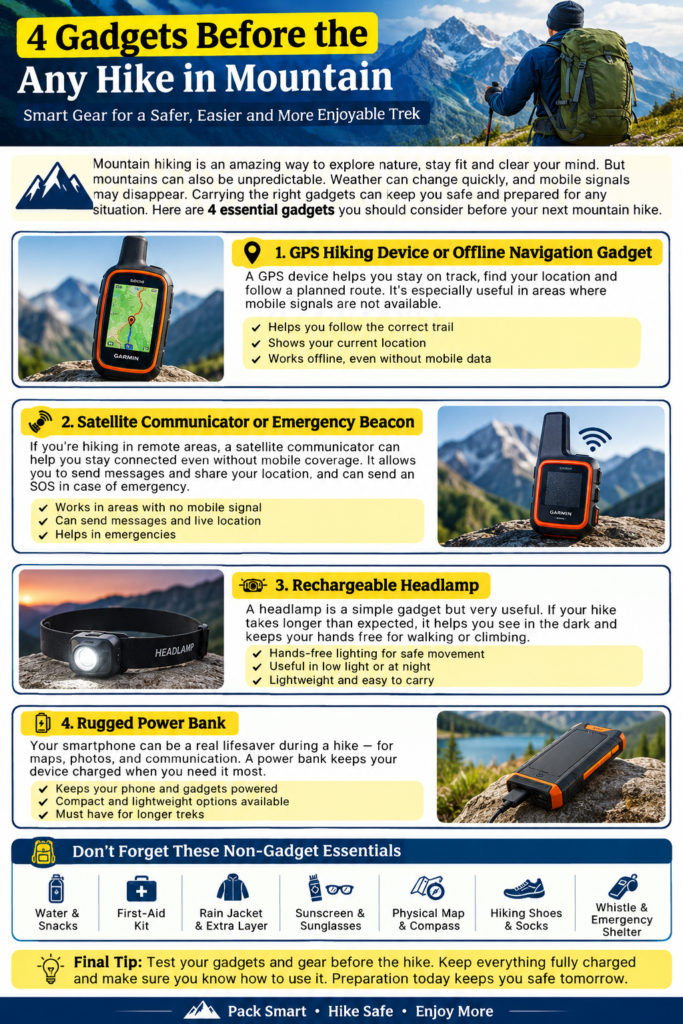
That’s why having the right gadgets in your backpack can make a big difference.
You don’t need to carry a huge collection of expensive technology. A few lightweight and useful gadgets can help with navigation, communication, lighting and keeping your devices powered.
Here are four gadgets worth considering before your next mountain hike.
GPS Hiking Device / Offline Navigation
The first gadget you should think about is a GPS navigation device.
Mountain trails can sometimes be confusing, especially when several paths meet at the same location. A dedicated GPS device can help you understand your location, follow a planned route and monitor your progress.
Even if you normally use Google Maps or another navigation app on your smartphone, downloading maps for offline use is a smart idea. Mobile coverage isn’t guaranteed in remote mountain areas, so you shouldn’t depend entirely on your phone’s internet connection. The National Park Service recommends carrying navigation equipment such as a map, compass and GPS system.
Tip: Don’t forget a physical map and compass as a backup. A gadget is useful, but you should also know how to navigate without electronics.
Rechargeable Headlamp
A headlamp might look like a simple gadget, but it can become extremely important when your hike doesn’t go according to plan.
Maybe you expected to return before sunset, but the trail takes longer than expected. Suddenly, you’re walking in darkness.
This is where a rechargeable LED headlamp becomes much more useful than your phone’s flashlight.
A headlamp keeps both hands free, which is especially useful when you’re walking over rocks, climbing sections of a trail or using trekking poles. The National Park Service also recommends headlamps as a preferred hands-free lighting option and advises carrying extra batteries
Don’t Forget These Non-Gadget Essentials
While technology can make hiking safer and more convenient, gadgets shouldn’t replace basic hiking equipment.
The National Park Service’s hiking guidance recommends carrying the “Ten Essentials,” which include navigation, sun protection, extra clothing, illumination, first aid, fire-starting supplies, repair tools, extra food, hydration and emergency shelter.
Before leaving, your backpack should also be appropriate for the trail and weather.
Depending on the hike, consider carrying:
- Enough water
- High-energy snacks
- First-aid kit
- Rain jacket
- Extra layer of clothing
- Sunglasses and sunscreen
- Whistle
- Emergency shelter
- Offline map
- Compass
- Appropriate hiking shoes
- Extra socks
- Personal medication
And most importantly, check the weather and trail conditions before starting. The NPS also recommends leaving your trip plan with someone you trust, especially when heading into remote areas
Useful Gadgets for Animal Awareness During a Mountain Hike
- Wildlife Detection Alarm 🔊
A small motion/noise alarm can alert you when movement is detected nearby, helping you stay aware of animals around your campsite or trail. - Ultrasonic Animal Deterrent 📡
A handheld device designed to emit high-frequency sound that may discourage some animals from approaching. Its effectiveness varies by species, so it shouldn’t be your only safety measure. - Bear Bell / Hiking Bell 🔔
Attaches to your backpack and makes continuous noise while you walk. The idea is to avoid surprising wildlife by making your presence known. - Motion-Sensor Trail Camera 📷
Great for camping areas. It can detect and record movement around your tent or campsite, helping you know whether wildlife is nearby. - High-Lumen Headlamp 🔦
Useful at dawn, dusk, and nighttime because good visibility helps you notice animal movement and avoid accidentally getting too close.